Slotted angle shelving is the simplest storage system most buyers will ever order — and the easiest to order wrong. The frame looks the same in every photo: four uprights, a few beams, steel shelf panels. What changes the result is not the look. It is the width, the depth, the number of tiers, and the load each level is actually rated for. This guide uses Huaxiao Rack's own boltless slotted angle range as the working example, so every size and load below is a real, orderable configuration. For the load-rating rules behind this guide, see our Warehouse Shelving Load Capacity Guide. For what happens to a rating when a shelf is put on wheels, see Static vs on Wheels.
1. What "slotted angle" actually means
Slotted angle shelving — also sold as boltless shelving, rivet shelving or keyhole shelving — is built from angle-steel uprights with slots punched at regular intervals. Beams drop into those slots and lock under load. There are no bolts, no nuts and no special tools: a rubber mallet and a level are normally enough, and a shelf level can be re-pitched later when the stock changes.
Huaxiao's boltless range is made from cold-rolled steel, with uprights of 1.0–1.2 mm and beams of 1.0–1.5 mm. Shelf panels are 0.5 mm steel in the standard single-bay units, and 0.5–0.8 mm in the modular rivet system. That steel thickness is part of the rating, not decoration: a wider bay with the same steel does not carry the same load as a narrow one, and a load figure is only meaningful when it is stated per level, for an evenly distributed load (UDL).
Two slot styles appear in this range. Inward-facing keyhole slots face into the bay, giving a clean exterior, and are used on the compact 900 mm home and stockroom units. External keyhole (gourd-hole) slots face out, for fast drop-in assembly on the wider commercial units. Both are tool-free. Neither changes the rated load by itself. What changes the load is the bay size, the steel, and how the weight is spread.
2. The sizes you can actually order
The table below is taken from the live product pages on 2026-11-10. Sizes are in millimetres (width × depth × height). Load is per shelf level, evenly distributed.
Three things in that table surprise most first-time buyers. First, the 1500 mm commercial bay is rated at the same 100 kg per level as the 900 mm home bay in the standard configuration on the product page. Do not assume a wider, "heavy-duty" looking bay carries more per level. Second, the only standard configuration in this range rated above 100 kg per level is the modular rivet system, at 100–150 kg per level. Third, depth matters as much as width: a 300 mm deep bay fits a narrow stockroom, while a 450 mm deep bay holds larger cartons and totes but needs more floor space.
All standard units in this range share the same factory terms: MOQ 50 pcs, production time 12–22 days, FOB/CIF, black powder coat or customised colour. Custom sizes, tier counts and finishes are made to order, and the final specification is stated in the approved drawing and quotation — not in a catalogue line.
| Configuration | Size (mm) | Tiers | Rated load per level | Best for |
|---|---|---|---|---|
| 5-tier slotted angle, compact | 900 × 400 × 1830 | 3 / 4 / 5 / 6 | Up to 100 kg | Home pantry, garage, light stockroom |
| 4-tier slotted angle, compact | 900 × 400 × 1830 | 4 | Up to 100 kg | Retail stockroom, garage, pantry, workshop |
| 6-tier slotted angle, small parts | 1200 × 450 × 2000 | 6 | Up to 100 kg | Small parts, hardware sorting, picking |
| 5-tier slotted angle, commercial | 1500 × 450 × 2000 | 3 / 4 / 5 / 6 | Up to 100 kg | Commercial stockroom, e-commerce storage |
| 4-tier steel angle, narrow | 600 × 300 × 1830 | 4 | Up to 100 kg | Narrow aisles, tight stockroom corners |
| Modular boltless rivet system | 900 × 400 × 1830 / 1200 × 450 × 2000 | 4 / 5 / 6, or continuous runs | 100–150 kg | Continuous multi-bay runs, distribution hubs |
3. How to pick: four questions, in order
Question 1 — What is the heaviest thing on one shelf? Weigh the heaviest single load that will sit on one level, then check it against the per-level rating, not the total for the whole bay. A bay with five levels at 100 kg per level is not a 500 kg shelf. It is five separate 100 kg shelves. If the heaviest load is under 100 kg per level and evenly spread, the standard 100 kg configurations cover it. If it is regularly above 100 kg, specify the modular system (100–150 kg per level) and confirm the exact figure for your configuration before ordering. If it is above that, you are no longer in slotted angle territory: look at medium-duty shelving instead.
Question 2 — How wide is the largest carton? The bay width must clear the largest carton with room to get it in and out by hand. A 900 mm bay suits standard cartons and archive boxes. A 1200 mm bay suits wider cartons and small-parts bins side by side. A 1500 mm bay gives a long continuous run, but remember Question 1: the extra width does not raise the per-level rating.
Question 3 — How many tiers do you actually need? More tiers are not always better. Each extra level adds storage, but it also shrinks the clear height between levels. Measure the tallest item that will sit on a level, add hand clearance, and only then count tiers. The standard units offer 3, 4, 5 or 6 tiers; the modular system also runs as continuous starter and add-on bays along a wall.
Question 4 — Where will it stand, and who will move it? Slotted angle shelving in this range is for manual, hand-loaded storage. It is not a pallet rack, and it is not rated for forklift loading. If the bay will be moved, use the mobile rating, not the static one — a shelf rated at 100 kg per level on its feet is not a 100 kg shelf on casters.
4. Three mistakes buyers keep making
- Buying by total load: "500 kg" usually means five levels at 100 kg each. One level loaded with 200 kg is overloaded, even if the other four are empty.
- Buying the widest bay for the heaviest goods: width and load capacity do not rise together in this range. The 1500 mm bay and the 900 mm bay share the same 100 kg per level standard rating.
- Forgetting the quotation inputs: stored goods and dimensions, maximum weight per level, load distribution, required levels and quantity, available floor area and clear height, and handling method. Send those five things and the quotation comes back accurate.
5. What to ask the factory before you order
- Heaviest load per level (kg), and is it evenly distributed?
- Largest carton / item dimensions (length × width × height)
- Required bay size, depth and number of tiers
- Starter bays, add-on bays, or a continuous run?
- Floor area, clear height, and aisle width available
- Colour / finish required, and any branding
- Quantity, delivery destination, and FOB or CIF terms
Conclusion
Slotted angle shelving rewards buyers who measure first. Pick the depth from the largest carton, pick the width from how cartons sit side by side, pick the tier count from the tallest item, and pick the rating from the heaviest load on a single level — in that order. In Huaxiao's standard boltless range that rating is 100 kg per level, with the modular rivet system at 100–150 kg per level for heavier or continuous-run storage. Anything above that belongs on a medium- or heavy-duty system, not on a wider angle bay.
Frequently Asked Questions
What is the load capacity of slotted angle shelving?
In Huaxiao's standard boltless range, up to 100 kg per shelf level for an evenly distributed load. The modular boltless rivet system is rated at 100–150 kg per level. Always confirm the figure for your exact configuration in the quotation.
Can slotted angle shelving be assembled without tools?
Yes. Beams drop into the slotted uprights and lock under load, so a bay goes up without bolts or specialised tools, and shelf levels can be re-pitched later.
What sizes are available?
Standard bays include 900 × 400 × 1830 mm, 1200 × 450 × 2000 mm, 1500 × 450 × 2000 mm and a narrow 600 × 300 × 1830 mm unit, in 3, 4, 5 or 6 tiers. Other sizes are made to order.
What is the MOQ and lead time?
MOQ 50 pcs for standard units, production time 12–22 days, FOB/CIF terms. Custom OEM sizes are available.
Is slotted angle shelving suitable for heavy warehouse storage?
It is suitable for hand-loaded cartons, parts, tools and retail stock. For loads above 150 kg per level, use medium-duty (100–500 kg per level) or heavy-duty (500–1,000 kg per level) shelving instead.
Related Products
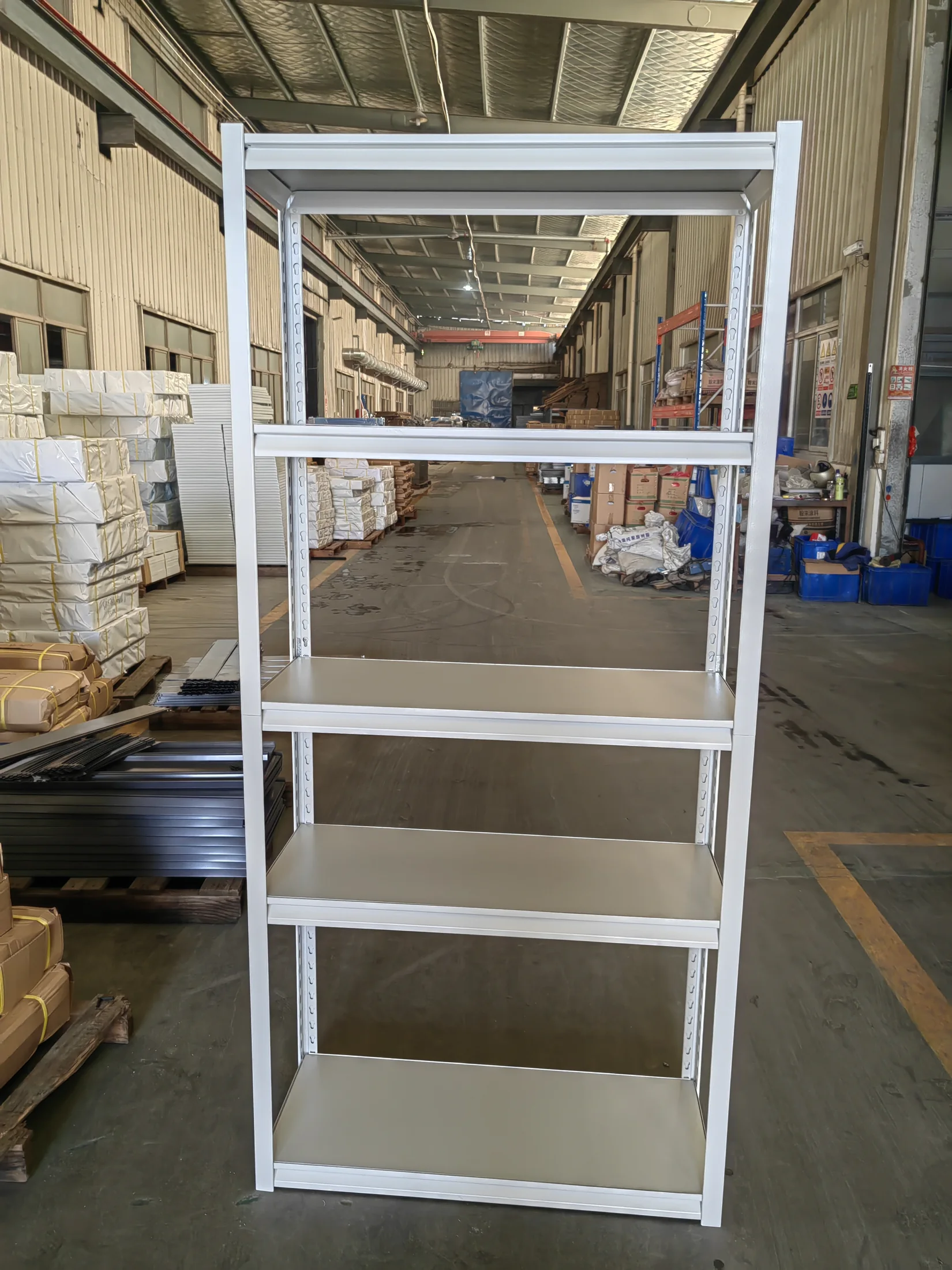
5-Tier Slotted Angle Shelving, 900*400*1830mm, 100 kg per Shelf
View Product →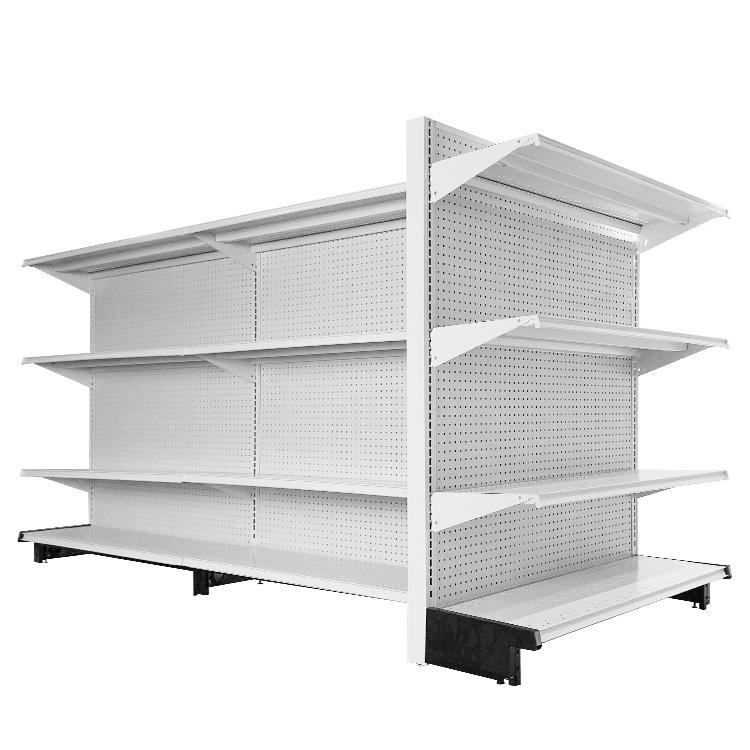
5-Tier Slotted Angle Shelving, 1500 * 450 * 2000 mm, for Commercial Storage
View Product →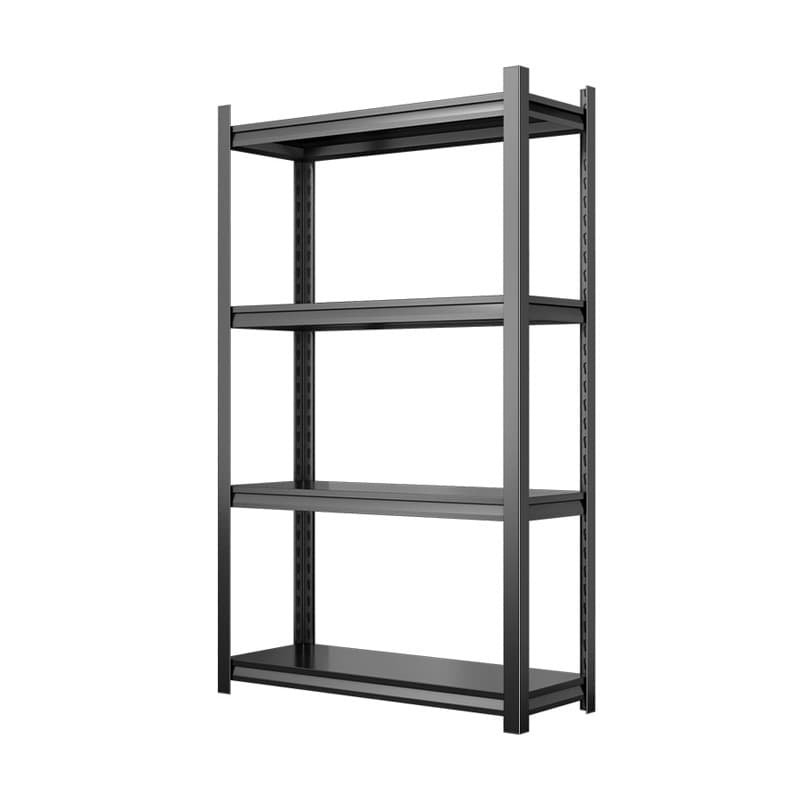
Modular Boltless Rivet Shelving Unit (Multi-Tier & Continuous Run)
View Product →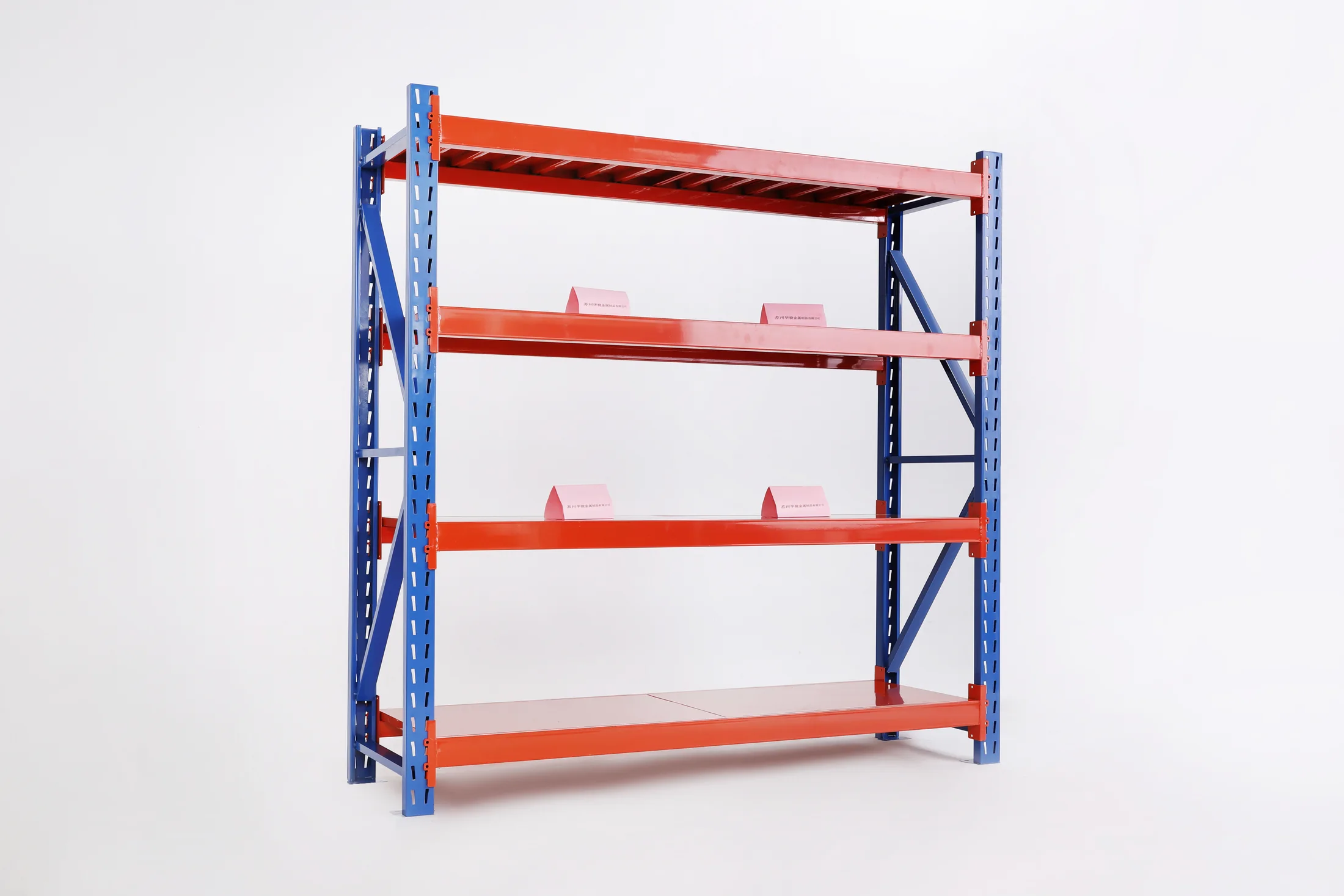
100–500 kg Blue & Orange Medium-Duty Shelving Rack
View Product →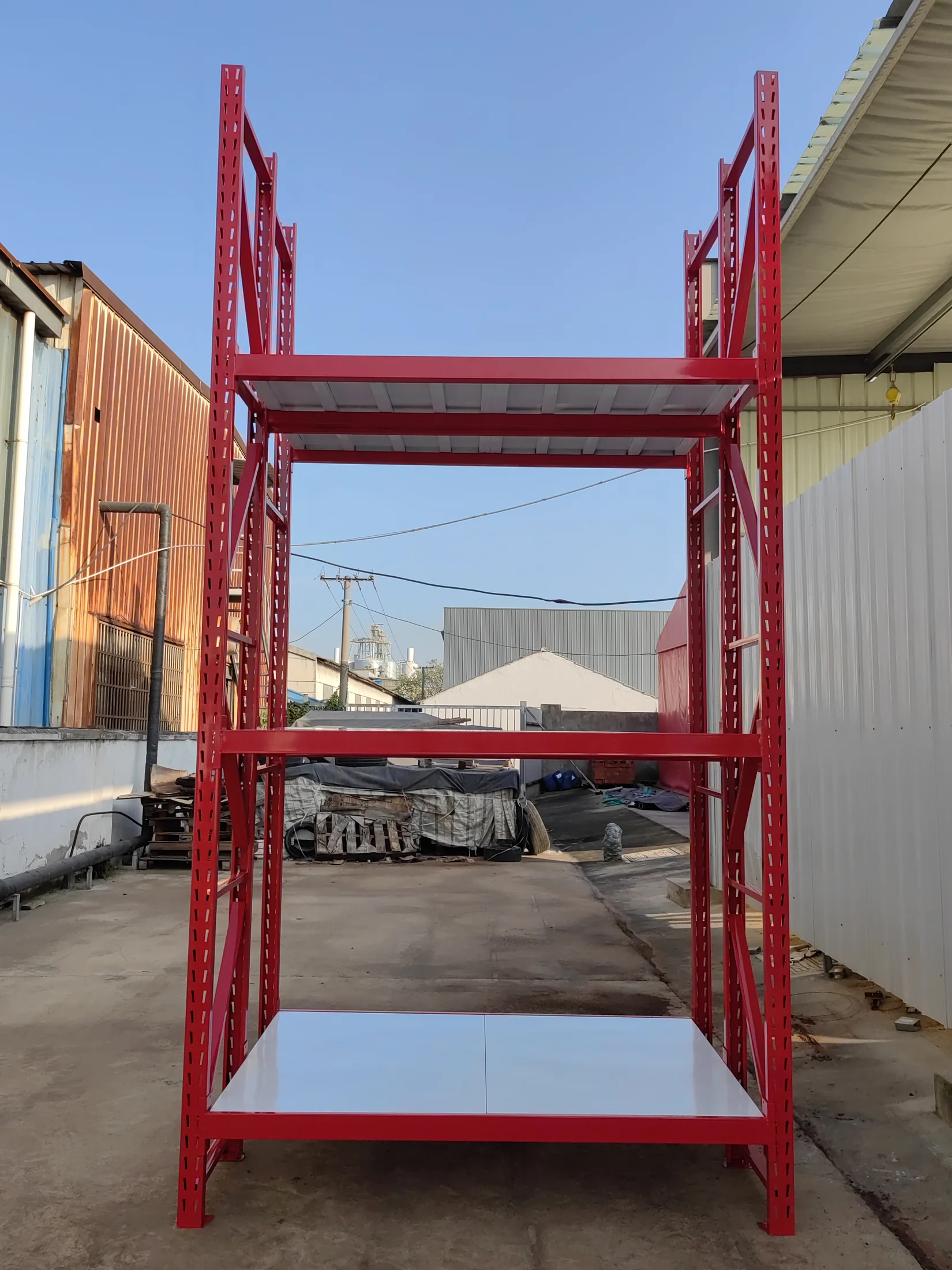
500–1000 kg Heavy-Duty Steel Warehouse Shelving Rack
View Product →Get a Free Layout Design & Quote
Send us your warehouse or store drawings — our engineers will reply within 24 hours with a tailored solution and factory-direct price.