If you have already read our Warehouse Shelving Load Capacity Guide, you know the basics: capacity is usually stated per shelf as a Uniformly Distributed Load (UDL), the total for the whole unit is not the same as the capacity of one shelf, and a point load in the centre is harder on a shelf than the same weight spread evenly. This guide is the follow-up for the two questions that guide does not answer in full — and the two that cause the most disappointment after delivery: (1) Why does the same shelf hold less once you put it on wheels? (2) Why does a shelf that 'held 195 lb in a test' still not have a 195 lb rating? Both answers are about what the number on the box actually measures, and what it does not.
1. Static is not mobile: casters cut capacity by more than half
A shelf rated for 1,000 lb standing still on level ground is not a 1,000 lb shelf once you put it on caster wheels. On wheels, the safe capacity can drop by over 50%.
The clearest example comes from a manufacturer's own manual for a widely sold wire unit. The same unit is rated 300 lb per shelf on levelling feet, but only 82.5 lb per shelf on wheels — 330 lb in total for a four-shelf unit. The frame did not change. The wheels changed how the load reaches the floor, how stable the unit is, and how much shock it takes when it moves.
That is why you should shop by the mobile rating when you need a mobile shelf, and by the static rating only when the unit will stay put on levelling feet. If you need to move a loaded shelf, buy the mobile number. If you need the full number, use levelling feet and keep the unit stationary. Never move a fully loaded shelf on casters and assume the static rating still applies.
Practical rule: decide first whether the shelf will move. If it will, ask the seller for the per-shelf capacity on wheels, in writing, for the exact size you are buying. If the listing gives only one number, ask which one it is.
2. A test is not a rating
A popular DIY overhead garage shelf was hang-tested at about 195 lb with no visible movement. The article covering it said explicitly that this 'should not be treated as a load rating' — and it is right.
A one-off test in one garage, on one ceiling, proves nothing about your joists, your screws, or a load left up there for years. A rating comes from the manufacturer, with a stated test method: UDL, static, on feet, for a stated size. A video, a hang test, or a comment saying 'mine holds fine' is not a rating.
The same confusion appears in product listings. For the same 4×8 ft overhead rack, different pages can list 600 lb, 750 lb, and a 1,200 lb test value side by side. Those are not three ratings for the same thing. They are different measurements — rated load versus tested load, one size versus another — presented as if they were the same. Before you compare two racks, check three things: the rated load (not the test load), the size it applies to, and the joist spacing it assumes.
Treat any number the same way. If you cannot find the test method, the size, and whether the number is static or mobile, you do not yet have a rating you can shop by.
3. Wire vs boltless: pick the deck for the load, not the label
'Heavy-duty' covers a roughly 6x range in tested products — from about 771 lb total to about 5,000 lb total — so the label alone tells you almost nothing. Choose by construction instead.
Steel wire racks, typically 250–350 lb per shelf, are good for totes, bins, pantry and general garage storage, where airflow and visibility help. They bend under point loads, small parts fall through the wires, and the plastic sleeves must be tapped fully home with a rubber mallet before loading, or the shelf sits crooked and wobbles.
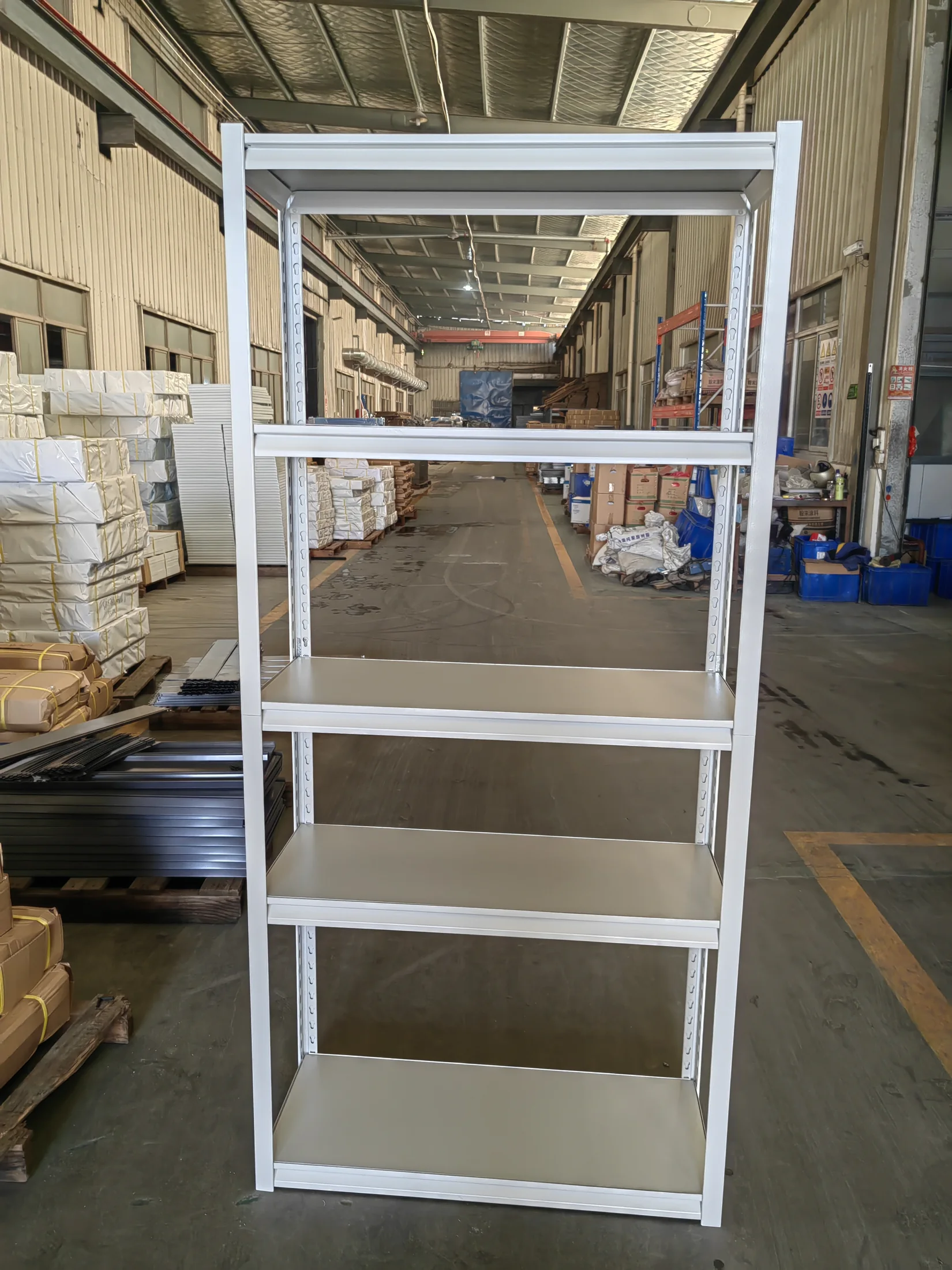
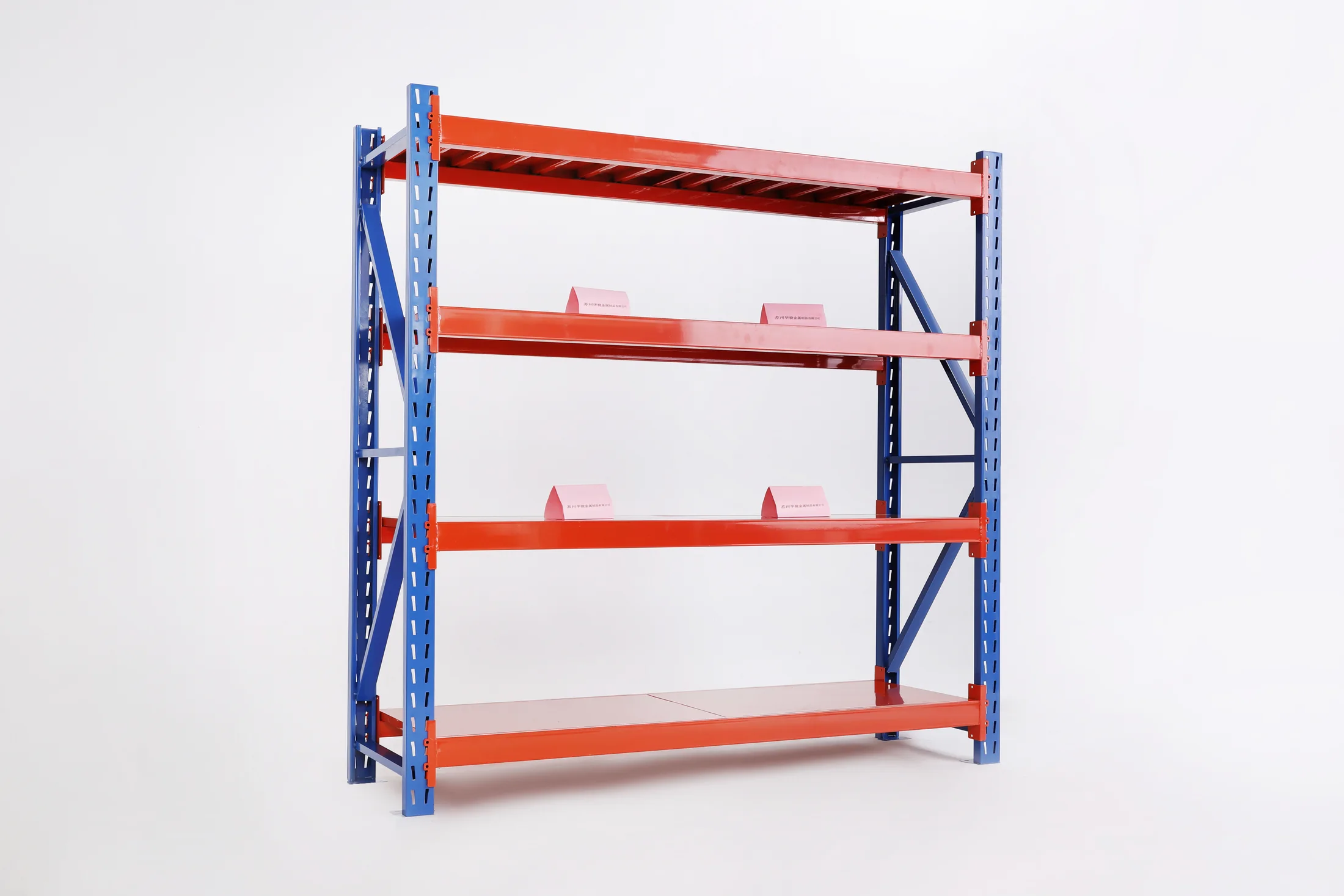
Boltless / rivet steel shelving, typically 800–1,000+ lb per shelf, is better for engines, lumber, paint and heavy commercial inventory. The trade-off is the deck: MDF decks can bow under concentrated loads, so spread heavy items, keep the heaviest load low and near the uprights, and make sure every rivet is fully seated.
Overhead / ceiling racks, typically 600–1,000 lb rated, are for seasonal totes above the car and reclaiming floor space. Here joist spacing and fasteners matter more than the rack itself. Check for sway when loading, and re-check the bolts after the first month. Overhead storage is not set-and-forget.
| Type | Typical per-shelf range | Best for | Watch out for |
|---|---|---|---|
| Steel wire rack | 250–350 lb | Totes, bins, pantry, general garage storage; airflow and visibility | Small parts fall through; bends under point loads; tap plastic sleeves with rubber mallet before loading |
| Boltless / rivet steel shelving | 800–1,000+ lb | Engines, lumber, paint, heavy commercial inventory | MDF decks can bow under concentrated loads; make sure every rivet is fully seated |
| Overhead / ceiling rack | 600–1,000 lb rated (often tested higher) | Seasonal totes above car; reclaiming floor space | Joist spacing and fasteners matter more than rack; check for sway and re-check bolts periodically |
4. A 60-second checklist before you load any shelf
- 1. Is the number per shelf, per unit, or per bay?
- 2. Is it UDL — and is your load actually spread out?
- 3. On feet or on wheels? Use the number that matches how you will use it.
- 4. Is it a rating or a test? A rating names the method, the size, and the conditions.
- 5. Is the unit anchored? Tall units — especially plastic shelving over 60 inches — should be bolted to wall studs.
- 6. Are the beams, rivets, and sleeves fully seated? Tap, check, and re-check after the first load.
Frequently Asked Questions
How much weight can a garage shelf hold on wheels?
Use the mobile rating, not the static one. It is often less than half the static rating — for example, 82.5 lb per shelf on wheels versus 300 lb per shelf on levelling feet for the same wire unit.
Can I put a heavy-duty shelf on casters?
Yes, but buy the mobile rating, and never move it while fully loaded.
Why is my wire shelf bowing?
Usually a point load in the centre, a sleeve that was never tapped fully home, or a load above the per-shelf UDL.
Is a 195 lb hang test a 195 lb rating?
No. A hang test is a one-off test in one garage. A rating is a manufacturer figure with a stated method, size, and conditions.
Related Products
Get a Free Layout Design & Quote
Send us your warehouse or store drawings — our engineers will reply within 24 hours with a tailored solution and factory-direct price.