A buyer comparing gondola shelving load capacity usually finds the same problem in every catalogue: one supplier says 50 kg per shelf, another says 200 kg, a third says 900 lbs — for what looks like the same bay. The numbers are not lying, and they are not comparable either. A load figure only means something when you know what it measures: evenly spread weight or one heavy point, which bay width and shelf depth it was measured on, and which steel and bracket sit underneath. This guide explains that measurement first, then shows why suppliers publish such different numbers, then puts Huaxiao's own verified figures in one comparison table. Every Huaxiao figure below is taken from the live product pages. Figures published by other suppliers are labelled as theirs. For sizes and bay layouts, see Supermarket Gondola Shelving Sizes Explained; for Gulf store fit-outs, see Supermarket Shelving in UAE & Saudi Arabia.
Quick answer
Load capacity on a gondola shelf means UDL — uniformly distributed load: the weight spread evenly across the whole shelf. A figure quoted without UDL, without the bay width and without the shelf depth cannot be compared with any other figure, because the same shelf can be rated 80 kg on a wide bay and 200 kg on a narrow one.
Huaxiao's verified figures, per shelf tier, evenly distributed: S50 gondola 100–200 kg per tier, wire-mesh gondola 50–120 kg per tier. Anything above 200 kg per tier is not a gondola question any more — step up to medium duty shelving at 100–500 kg per tier. Other gondola styles are quoted on application, because the rating depends on your bay size and configuration.
| At a glance | S50 gondola | Wire-mesh gondola |
|---|---|---|
| Rated load per shelf tier (UDL) | 100–200 kg | 50–120 kg |
| What decides where in the range | Bay width, shelf depth, shelf thickness | Bay width, mesh shelf, bracket design |
| Best for | Supermarket islands and wall bays, full grocery ranges | Open display where stock must be seen through the shelf |
| Price from (per set) | Supermarket shelving from $23.0 per set; MOQ 50 sets | Supermarket shelving from $23.0 per set; MOQ 50 sets |
1. What a load figure actually means: UDL, not a single heavy box
UDL stands for uniformly distributed load: the weight spread evenly across the whole shelf, the way tins and cartons actually sit on it. WZ Rack's guide on supermarket shelving load capacity makes the same point, and it is the one definition that matters in this whole article: a load figure is a UDL figure, or it is not a figure you can use. A single heavy point — one crate stood in the middle of a shelf — is a concentrated load, and a shelf rated for 200 kg UDL will bend under far less than 200 kg if it all sits in one spot.
That is the first question to ask about any number on a supplier's page: is it UDL, and what bay was it measured on? A rating without a bay width and a shelf depth is a rating for a shelf that does not exist. Two bays from the same supplier, same steel, same shelf, can carry different ratings simply because one is a 665 mm bay and the other is a 1,250 mm bay — the wider the span, the less each shelf holds. The S50 range in this guide is the same system in both cases: its 100–200 kg per tier rating is a range precisely because the bay width and shelf depth change the number, and the exact figure for your configuration is confirmed in the quotation.
So when a catalogue says 200 kg, read the rest of the line. If there is no UDL, no width and no depth next to it, treat it as a headline, not a rating — and ask the supplier for the three missing facts before you compare it with anything else.
2. Why suppliers publish such different numbers
Five variables move a gondola rating up or down, and every supplier sets them differently. That is why the same-looking bay is published at 50 kg in one place and 200 kg in another — and why neither number is wrong on its own terms.
Shelf thickness and steel grade come first. WZ Rack's guide on supermarket shelving load capacity ties its three bands to this directly: its 80 kg band is 1.2 mm cold-rolled steel, and the 120 kg and 200 kg bands are thicker steel on the same kind of bay. A thinner shelf on the same uprights is a lower rating, not a worse product — it is a shelf built for a lighter job.
Bay width comes second. The wider the bay, the longer the shelf has to span, and the less it holds. Depth comes third: a deeper shelf spreads the same goods over more steel, but it also changes the leverage on the brackets. The upright and bracket design comes fourth: a heavier upright and a longer bracket arm hold more, and a single-sided wall bay and a double-sided island bay do not carry the same rating even when the shelf is identical, because the island shelf is loaded from both sides and the wall bay is braced by the wall.
The published numbers show how wide the spread gets once those five variables differ. SmartBuy's Alibaba buying guide publishes a standard double-sided gondola at about 250 lbs (about 113 kg) per tier, a single-sided wall bay at about 150 lbs (about 68 kg) per tier and a mobile bay at about 120 lbs (about 54 kg) per tier, with standard commercial double-sided bays at 150–400 lbs (about 68–181 kg) per tier and heavy-duty bays above 500 lbs (about 227 kg) per tier — those are SmartBuy's own published figures. Youmarts publishes a standard retail gondola at 50–120 kg per tier and a heavy back-of-store or cold-store rack at up to 300 kg per tier — those are Youmarts' own published figures. IronMax publishes a double-sided gondola at 80–120 kg per tier, a single-sided wall bay at 60–100 kg per tier (its own table also writes 70–110 kg per tier) and a heavy hypermarket bay at 120–180 kg per tier — those are IronMax's own published figures. And UNRacking's own product page writes 25 kg per tier for a single-sided wall gondola — that is UNRacking's own published figure.
The outlier shows why the measurement matters more than the number. SmartBuy's heavy-duty supermarket shelves guide publishes at least 600–1,000 lbs (about 272–454 kg) per tier, with a single-sided gondola at 800 lbs (about 363 kg) per tier and a double-sided gondola at 900 lbs (about 408 kg) per tier — those are that guide's own published figures, and they are far above every other source on this page. A number that high is either a different measurement, a different bay, or a different definition of the shelf — which is exactly why this guide asks for UDL, width and depth before any two numbers are compared. None of these competitor figures are Huaxiao figures, and none of them are quoted here as a general fact about gondola shelving.
| Source (own published figures) | Single-sided wall bay | Double-sided island bay | Heavy-duty bay |
|---|---|---|---|
| SmartBuy (Alibaba buying guide) | About 150 lbs (about 68 kg) per tier | About 250 lbs (about 113 kg) per tier; standard range 150–400 lbs (about 68–181 kg) | Above 500 lbs (about 227 kg) per tier |
| SmartBuy (heavy-duty guide) | 800 lbs (about 363 kg) per tier | 900 lbs (about 408 kg) per tier | At least 600–1,000 lbs (about 272–454 kg) per tier |
| Youmarts | — | Standard retail 50–120 kg per tier | Back-of-store / cold-store up to 300 kg per tier |
| IronMax | 60–100 kg per tier (own table also 70–110 kg) | 80–120 kg per tier | Hypermarket 120–180 kg per tier |
| WZ Rack (product page) | — | 180 kg per tier (solid-back double-sided bay) | — |
| UNRacking (product page) | 25 kg per tier | — | — |
3. Huaxiao gondola load capacity, compared
Only two Huaxiao gondola figures are published as verified ratings, and they are the only two in this table. Everything else is quoted on application, because the rating depends on the bay size and configuration you order.
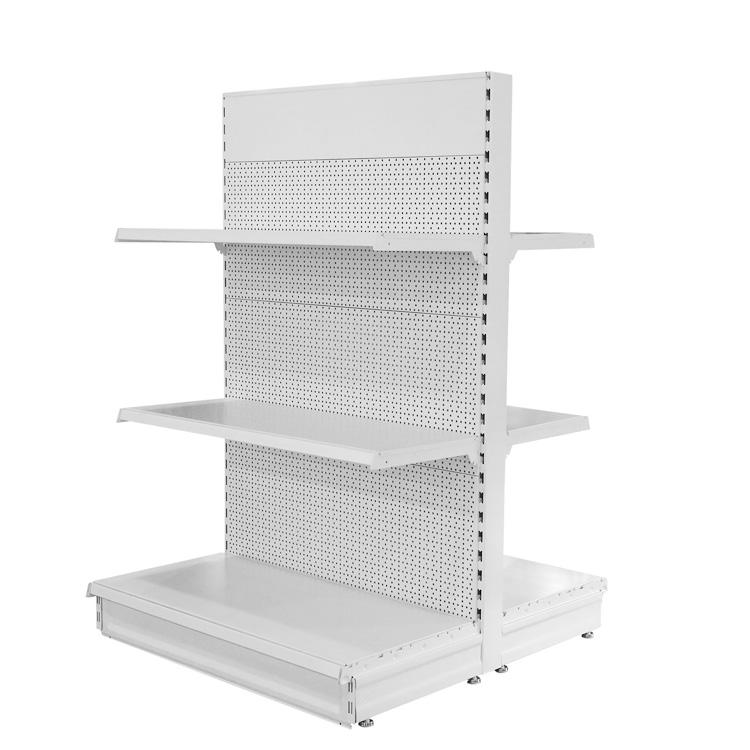
The S50 gondola is rated 100–200 kg per shelf tier, UDL, on the live product page. It is the European S50 system — 50 mm upright pitch, cold-rolled steel uprights, single-sided wall bays and double-sided island runs — and the range is a range because the bay width (665–1,330 mm) and the shelf depth (300–670 mm) change the rating. The exact figure for your bays is confirmed in the quotation, against your bay sizes. Sizes and layouts are in Supermarket Gondola Shelving Sizes Explained, and are not repeated here.
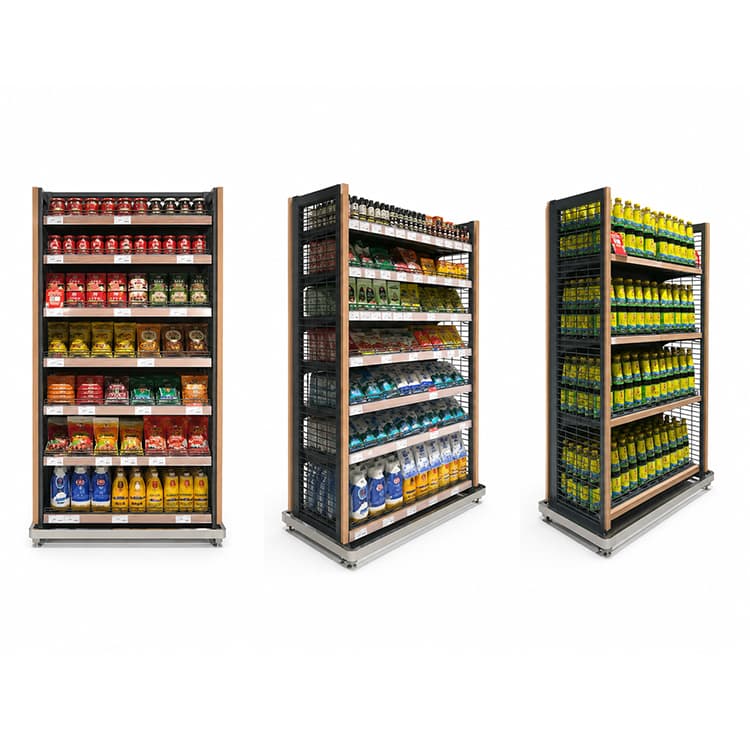
The wire-mesh gondola is rated 50–120 kg per shelf tier. It is the open display bay: the mesh shelf lets customers see the stock through it, which is why it is used where the display has to stay open. Its rating is lower than the S50's because the mesh shelf and its brackets are a lighter construction — the trade-off for visibility is load, and the table states it plainly rather than hiding it.
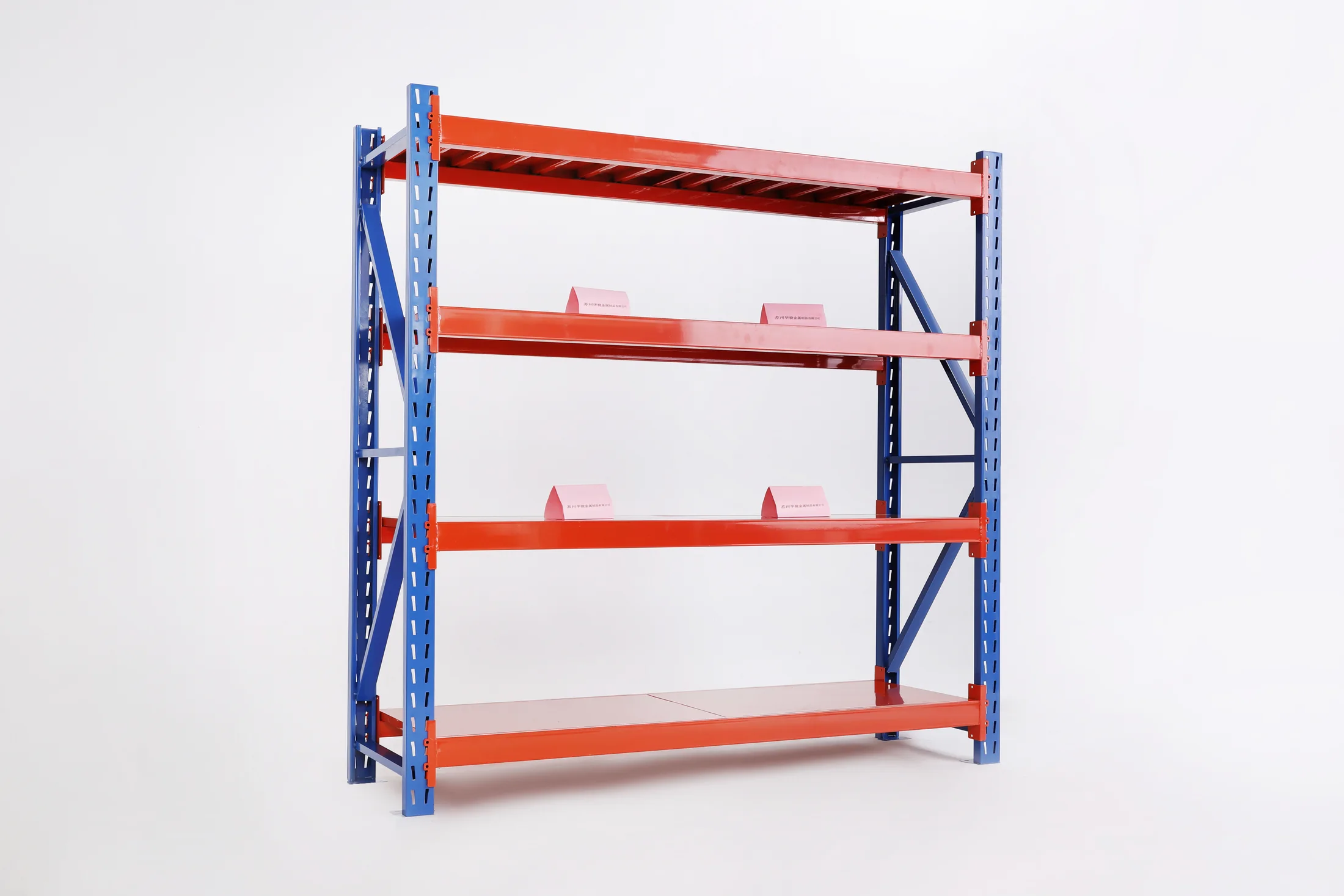
Anything above 200 kg per tier is outside the gondola range. The next step is medium duty shelving at 100–500 kg per tier, then heavy duty at 500–1,000 kg per tier. A supplier that quotes a gondola bay above 200 kg per tier without stating the bay width, shelf depth and UDL should be asked for those three facts — see section 5.
| Huaxiao gondola | Rated load per shelf tier (UDL) | Source | Best for |
|---|---|---|---|
| S50 gondola | 100–200 kg | Live product page (specs: Load Capacity 100–200 kg per shelf tier, UDL) | Supermarket islands and wall bays, full grocery ranges |
| Wire-mesh gondola | 50–120 kg | Supermarket gondola category page | Open display where stock must be seen through the shelf |
| Other gondola styles | Quoted on application | Rating depends on bay size and configuration — confirmed in the quotation | Ask for the rating for your exact bay size |
| Above 200 kg per tier | Step up: medium duty 100–500 kg per tier | Live medium duty product page | Drinks, rice, flour, cooking oil — the heavy end of a grocery range |
4. How to pick a rating by what goes on the shelf
Pick by the heaviest shelf, not by the average shelf. A gondola run is only as strong as its most loaded tier: one tier of cooking oil decides the rating for the whole bay, even if the other five tiers hold crisps.
Light goods — snacks, personal care, small packs — sit comfortably on the wire-mesh gondola at 50–120 kg per tier, and on the lower end of the S50 range. This is the display end of a store: the load is light, the shelf count is high, and visibility matters more than strength.
Medium goods — boxed groceries, sauces and condiments, canned food — belong on the S50 gondola at 100–200 kg per tier. This is the middle of the store, and the rating to check is the one for your widest bay, not the narrowest: a 1,250 mm bay holds less per shelf than a 665 mm bay in the same system, so quote the widest bay in your order.
Heavy goods — drinks, rice, flour, cooking oil — need the top of the S50 range or a step up. If the heaviest tier is above 200 kg, the answer is not a stronger gondola shelf: it is medium duty shelving at 100–500 kg per tier, with the heavy goods on the lowest tiers. Put the heaviest stock at the bottom of the bay in any case — it lowers the centre of gravity, and it is the tier a customer reaches for first.
One more check before you order: count the tiers. A six-tier bay and a four-tier bay with the same per-tier rating do not hold the same total — and the rating that matters is still per tier, not the total, because a single overloaded tier fails on its own.
5. Five questions to ask any supplier before you order
Ask these five questions, and write the answers into the quotation. A supplier that cannot answer them is selling a headline, not a rating.
1. Is the figure UDL or a concentrated load? If the answer is UDL, the figure is comparable. If it is a concentrated load, or the supplier does not know, the figure cannot be compared with any other supplier's number.
2. Which bay width and shelf depth was it measured on? Get the rating for your widest bay and your deepest shelf, not the narrowest bay in the range.
3. What shelf thickness and bracket specification sit behind it? The WZ Rack bands are the model here: 80 kg on 1.2 mm steel is a different shelf from 200 kg on thicker steel, and the price should reflect that.
4. Does the rating include the base shelf? The base tier of a gondola often carries more than the tiers above it. Confirm whether the quoted figure covers the base, and whether the base is included in the price.
5. Is the quoted price for that exact configuration? A rating and a price only go together when they describe the same bay: same width, same depth, same tier count, same shelf. Get both in the same quotation, and confirm the final specification in the approved drawing.
Conclusion
Gondola load capacity is not a single number to shop for — it is a measurement, and the measurement is UDL on a stated bay width and shelf depth. Once that is clear, the spread across suppliers stops looking like a contradiction: 25 kg and 900 lbs are not two answers to the same question, they are answers to different questions, on different bays, measured different ways. Huaxiao's own verified figures are S50 at 100–200 kg per tier and wire-mesh at 50–120 kg per tier, both UDL, both confirmed in the quotation for your bay sizes.
Start with the two bays below — the S50 gondola system and the wire-mesh gondola — or send your bay sizes and the heaviest product on one tier, and get a factory layout, a per-tier rating and a price for that exact configuration.
Frequently Asked Questions
What does gondola shelving load capacity mean?
It means UDL — uniformly distributed load: the weight spread evenly across the whole shelf. A figure quoted without UDL, without the bay width and without the shelf depth cannot be compared with any other figure.
How much weight can Huaxiao gondola shelving hold per shelf?
S50 gondola: 100–200 kg per shelf tier, UDL, on the live product page. Wire-mesh gondola: 50–120 kg per shelf tier. Other gondola styles are quoted on application, because the rating depends on your bay size and configuration.
Why do different suppliers give such different load figures for gondola shelving?
Five variables move the rating: shelf thickness and steel grade, bay width, shelf depth, upright and bracket design, and single-sided versus double-sided construction. Each supplier sets them differently, so the numbers describe different bays — ask for UDL, bay width and shelf depth before comparing any two figures.
Is 200 kg per tier enough for drinks, rice and cooking oil?
It depends on the heaviest tier, not the average. Drinks, rice, flour and cooking oil are the heavy end of a grocery range: if the heaviest tier is above 200 kg, step up to medium duty shelving at 100–500 kg per tier, and put the heaviest stock on the lowest tiers.
What is the minimum order and starting price for Huaxiao gondola shelving?
Supermarket shelving starts at $23.0 per set, with a minimum order of 50 sets. The final price depends on bay size, tier count, load rating and finish, and is confirmed in the quotation.
Related Products
Get a Free Layout Design & Quote
Send us your warehouse or store drawings — our engineers will reply within 24 hours with a tailored solution and factory-direct price.